


The sale of Polygon to a Canadian pornographer last year might have felt to some at the popular gaming website like being NPCs in a Hitman level. A cloak-and-dagger procession of NDAs clued in some of the staff to an ominous change in ownership coming in the days ahead, but no one knew who else knew, or the full details of what the sale would entail.
“I didn’t know how many people were under NDA,” Polygon‘s former deputy editor Maddy Myers recently told me (full disclosure: Myers was also previously the deputy editor of Kotaku). “I didn’t know who knew and who didn’t, and I didn’t know that everyone who wasn’t under NDA wasn’t going to be retained. But it did seem suspicious, because I was like, I know not everyone knows about the sale. I don’t know why some people are being told ahead of time. This seems fishy to me, and it was a fishy, weird time period.”
Valnet, the click farm that ended up purchasing Polygon from Jim Bankoff’s Vox Media for an undisclosed sum, ended up laying off most of the staff, including all of its union employees. The site was completely uprooted overnight while the new owners rushed in a team of underpaid freelancers to start immediately churning out new articles.
“They essentially told us just enough to make us feel like it was our only option to come over,” said Zoë Hannah, Polygon‘s former games editor. “The way I’ve described it since then is that I feel like both of us were used as bargaining chips for this sale. They really wanted managers to come over so that they could hit the ground running with these contractors that they had already lined up, we found out later.”
Myers and Hannah were spared while over 30 of their colleagues were laid off, but staying at the site was untenable. “It was about a week and a half in where I realized, like, okay, yeah, this, this is not going to work for me,” Myers said. “I’m really personally depressed about how many people are gone. I don’t feel good about replacing them. It truly was like my own personal emotional state at that time, I was like, I need a reset.”
Hannah confronted Vox HR after the sale about feeling misled during the run-up. “I told them this was in bad faith, I feel like I was not given any options here.” She said the weeks that followed led to more disillusionment with the situation, describing her final month at the site as “kicking and screaming.” Both Myers and Hannah ended up leaving Polygon in June.
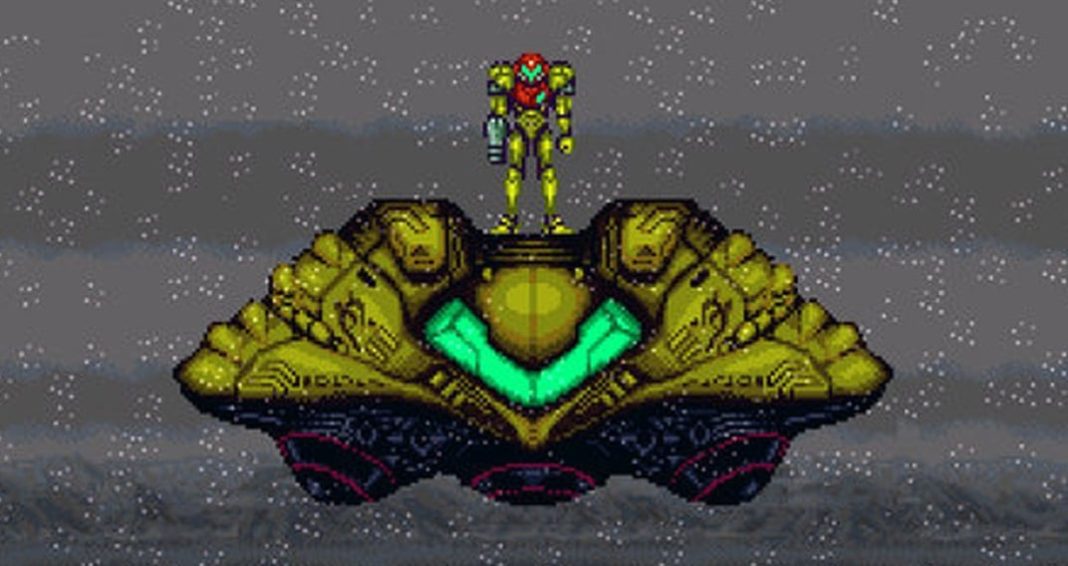
They could have tried to find other jobs in digital games media or, as has become increasingly common for experienced talent, ditched the field entirely. Instead, they decided to make their own video game website. It would analyze games specifically through the lens of gender and identity at a time when those perspectives have been squeezed out of other outlets under pressure from the all-homogenizing algorithm. It would be self-owned so it could never be sold out from under them. It would be called Mothership.
Mothership = Teen Vogue but for video games
“It’s Teen Vogue, but for video games, a bit of a bittersweet pitch now that Teen Vogue has been completely gutted,” Myers said. “I feel like that’s part of the pitch as well. It’s like what The Mary Sue used to be, but what if it didn’t have to publish dozens and dozens of stories a day, and it had fewer stories a day and it had more reporting and more criticism that you didn’t have to write in 20 minutes?”
Mothership will have podcasts, short form video, and even a newsletter, but it will still primarily be a website, one where readers go daily to read smart things from smart people and that embraces identities and perspectives that are still radically underrepresented across the rest of the games media space. What the pair is referring to as the site’s launch issue will include the work of Mary Sue cofounder Susana Polo and other former Polygon colleagues like Nicole Clark and Nicole Carpenter. Subscriptions starting at $7 a month (there’s a lifetime discount for those who sign up ahead of the January 26 launch) will fund quality journalism and criticism that doesn’t have to feed a gauntlet of display ads with endless clicks.
“There will be no programmatic ads whatsoever on Mothership, which is badge of honor,” Hannah said.
“People remember what The Mary Sue used to be like when it had a staff of five instead of a staff of one, and they remember what Teen Vogue used to be like and they also believe in the idea, and especially when I talk to women I know who play games, and queer people I know who play games, I just see the light in their eyes when they hear this, and they’re like, ‘I just want this so badly, and I believe in it so much,’ and that’s happened so much more often than I expected,” Myers said.
She continued, “I think when you come up with an idea like this, you’re like, ‘well, I’ll just write for me. I’ll write for the me in the past that wanted a website like this and it’s okay if maybe six people read it,’ you know, like, that’s okay. But there have been so many people that are like, ‘no, I really want this,’ that it’s given me and Zoe a lot more confidence that this might be a real idea. We should actually do this, we should stop interviewing for other jobs and put aside all of our other things that we were kind of thinking about doing and take this seriously.”
Mothership is the latest in a series of subscription-backed independent games media outlets that are blazing an alternate path through the current collapse of the internet thanks to social media monopolies, changing media consumption habits, and the proliferation of AI slop. Those include new ventures like Aftermath and Second Wind as well as long-standing brands that recently went indie like Giant Bomb and Digital Foundry. It’s also the fourth to come out of Polygon sale, with former staff also founding the websites Rogue, Design Room, and Post Games.
That last one is a magazine podcast series by former Polygon EIC Chris Plante, who interviewed Myers and Hannah about their new site and the history of women in games media for the latest episode. Notably, out of all of these gaming sites, Mothership is one of the few not staffed entirely or even primarily by straight dudes. At a time when the national paper of record openly pontificates about whether feminism destroyed the modern workplace and angry online mobs embrace anti-woke conspiracies, Mothership isn’t shying away from looking at gaming within an identity-first framework.
“We know that games journalists and critics who’ve covered the intersection between gaming and gender, bodies, and identity have faced serious backlash in the past, and the contributors here at Mothership have faced it ourselves, too,” the site’s announcement reads. “With your help, we’ll build a sustainable business that can afford rigorous editing processes, sensitivity readers, and legal counsel when necessary for high-risk investigations of high-profile games studios and figures.”
“Feminism, I feel like, has become a dirty word in a lot of circles,” Myers told me. “It’s [considered] cringe and I do feel like we’re in a really, really weird place with it right now, and it’s strange to me as a writer who’s been doing it all along and has watched all of those different phases happen, some progress, and then some blowback, and then some progress, and then some blowback. I feel like I’ve seen that throughout my career, and I very much feel like we’re in a blowback phase right now, but that’s part of why I’m like, we need to keep doing this. We have to keep trying.”